Mantra Japa & Sadhana: A Beginner’s Guide to Daily Practice
Mantra japa is the repetition of a sacred sound; sadhana is the disciplined daily practice that transforms you. Here is how to begin — choosing a mantra, using a mala, and building a routine.
What Are Mantra & Sadhana?
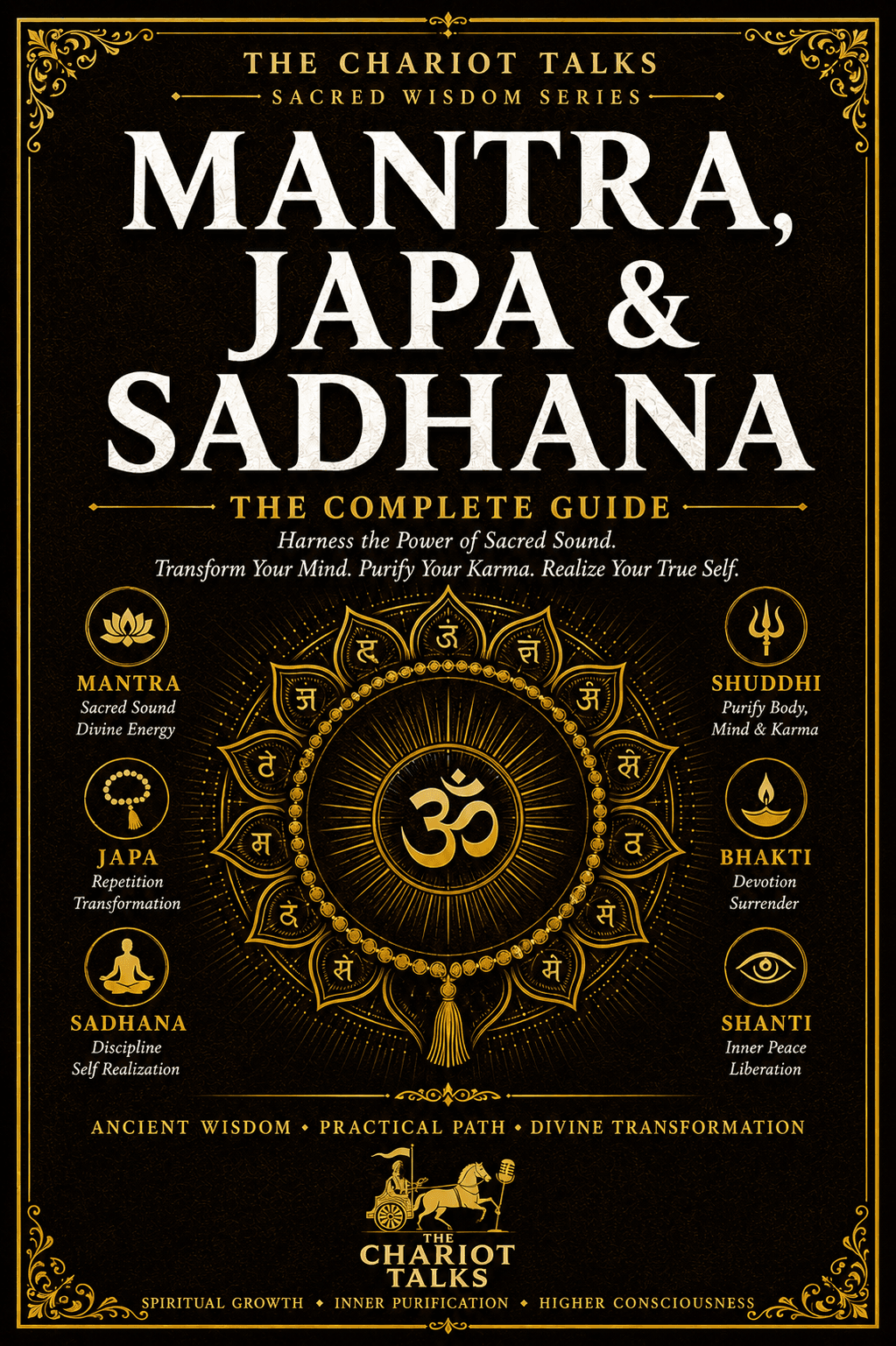
A mantra is a sacred sound, syllable, or phrase whose repetition focuses and elevates the mind. Japa is the practice of repeating that mantra, and sadhana is the committed, regular spiritual discipline within which you do it. Together they form one of the most accessible and powerful paths in Sanatan Dharma.
The principle is simple: what you repeat, you become. Steady repetition of a sacred sound gradually quiets mental chatter and attunes you to its qualities.
Choosing a Mantra
Beginners do well to start with a simple, universal mantra:
- Om (ॐ): the primordial sound, the vibration of the cosmos
- Om Namah Shivaya: a devotion to Shiva; grounding and purifying
- Om Namo Bhagavate Vasudevaya: a Vishnu mantra for peace and surrender
- Gayatri Mantra: for wisdom, clarity, and illumination
- Bija (seed) mantras such as *Hreem*, *Shreem*, *Kleem* — single-syllable sounds each tied to a deity and energy
Choose one that resonates with you and stay with it — depth comes from repetition, not variety.
How to Do Japa With a Mala
- Sit comfortably with a straight spine, facing East or North if possible.
- Take a japa mala of 108 beads. Hold it in your right hand, draped over the middle finger.
- Start at the bead next to the Guru bead (the larger tassel bead). Use your thumb to pull each bead toward you as you chant the mantra once per bead.
- Complete 108 repetitions — one full mala — ending back at the Guru bead. Do not cross over the Guru bead; instead turn the mala around to begin the next round.
- Keep the pace steady and the mind on the sound and meaning. When it wanders, gently return.
- Close with a moment of silence, sitting with the vibration before you rise.
Building a Daily Sadhana
- Practise at the same time each day — the pre-dawn Brahma Muhurta is ideal, but any consistent time works
- Begin with a sankalpa (a clear intention or resolve)
- Start with one mala (108 repetitions) and grow naturally
- Keep a fixed seat and space — this builds the energy of the practice over time
- Value consistency over intensity — a few minutes daily beats an hour once a week
Common Mistakes to Avoid
- Switching mantras too often — depth requires staying with one
- Rushing — japa is not a race; presence matters more than speed
- Practising irregularly — sporadic effort yields little; rhythm is everything
- Chasing experiences — let results unfold rather than forcing them
Where to Go Next
To go deeper — the science of mantra and sound, bija mantras and their deities, correct pronunciation, and how to build a sustainable practice that lasts — see the Mantra & Sadhana Course.
Frequently Asked Questions
How many times should I chant a mantra?
A traditional round of japa is 108 repetitions, counted on a mala of 108 beads. Beginners can start with one mala a day and increase gradually. Consistency at the same time each day matters more than the total count.
Why do japa malas have 108 beads?
The number 108 is considered sacred throughout Vedic tradition, symbolising wholeness and the link between the individual and the cosmos. A mala’s 108 beads (plus a separate Guru bead) let you count a full round of japa without losing focus.
Can I do mantra japa without a mala?
Yes. A mala helps you count and stay focused, but you can practise japa using your breath, your fingers, or simply by repeating the mantra silently. The essence is steady, attentive repetition — the mala is a helpful tool, not a requirement.