Yagya & Havan at Home: Meaning, Vidhi & Benefits
Yagya, the sacred fire offering, is one of the oldest and most powerful Vedic practices. Here is what it means, the samagri you need, and a simple step-by-step vidhi to perform Havan at home.
What Is Yagya & Havan?
Yagya (also Yajna) is the Vedic ritual of making offerings into a consecrated fire while chanting mantras. Havan (or Homa) is the household form of Yagya — a fire ceremony performed at home for purification, blessings, and specific intentions. Fire, Agni, is regarded as the divine messenger who carries the offerings to the deities.
The practice is both outward and inward: as you offer ghee, herbs, and grains into the flame, you symbolically offer your ego and desires, purifying the mind along with the space.
What You Need (Samagri)
- A havan kunda (fire pot) or a fire-safe metal vessel with sand
- Dry mango wood or other sacred wood, and camphor (kapur) to light the fire
- Ghee (cow’s ghee is preferred) and a spoon for offerings
- Havan samagri — a blend of herbs, and optionally grains, black sesame (til), and dry coconut
- Matchbox or lighter, a small bowl of water, and a cloth for cleaning
- An idol or picture of your chosen deity, plus flowers and incense
Step-by-Step Havan Vidhi
- Purify and prepare. Bathe, wear clean clothes, and clean the space. Place the havan kunda facing East and sit facing East or North.
- Sankalpa (intention). Take a little water in your right hand and silently state your purpose for the havan, then release the water.
- Invoke Ganesha. Begin by remembering Lord Ganesha and your Ishta Devata (chosen deity) for an obstacle-free ceremony.
- Light the fire (Agni sthapana). Arrange the wood and camphor, and light the sacred fire.
- Offer ahutis. Chant your mantra and, at the word "Svaha", offer a spoon of ghee and a pinch of samagri into the fire. Repeat for the number of rounds you have resolved (commonly 11, 21, or 108).
- Purnahuti (final offering). Conclude with the main, larger offering — often including a whole dry coconut with ghee — as the culminating ahuti.
- Aarti & prasad. Perform aarti, pray for blessings, and distribute prasad. Let the fire die down safely on its own.
Benefits of Havan
- Purifies the environment — the burning of ghee and herbs is traditionally held to cleanse the air and space
- Calms and focuses the mind through mantra and ritual discipline
- Invokes blessings for health, prosperity, and specific intentions set in the sankalpa
- Marks occasions — housewarming (griha pravesh), festivals, and new beginnings
Where to Go Next
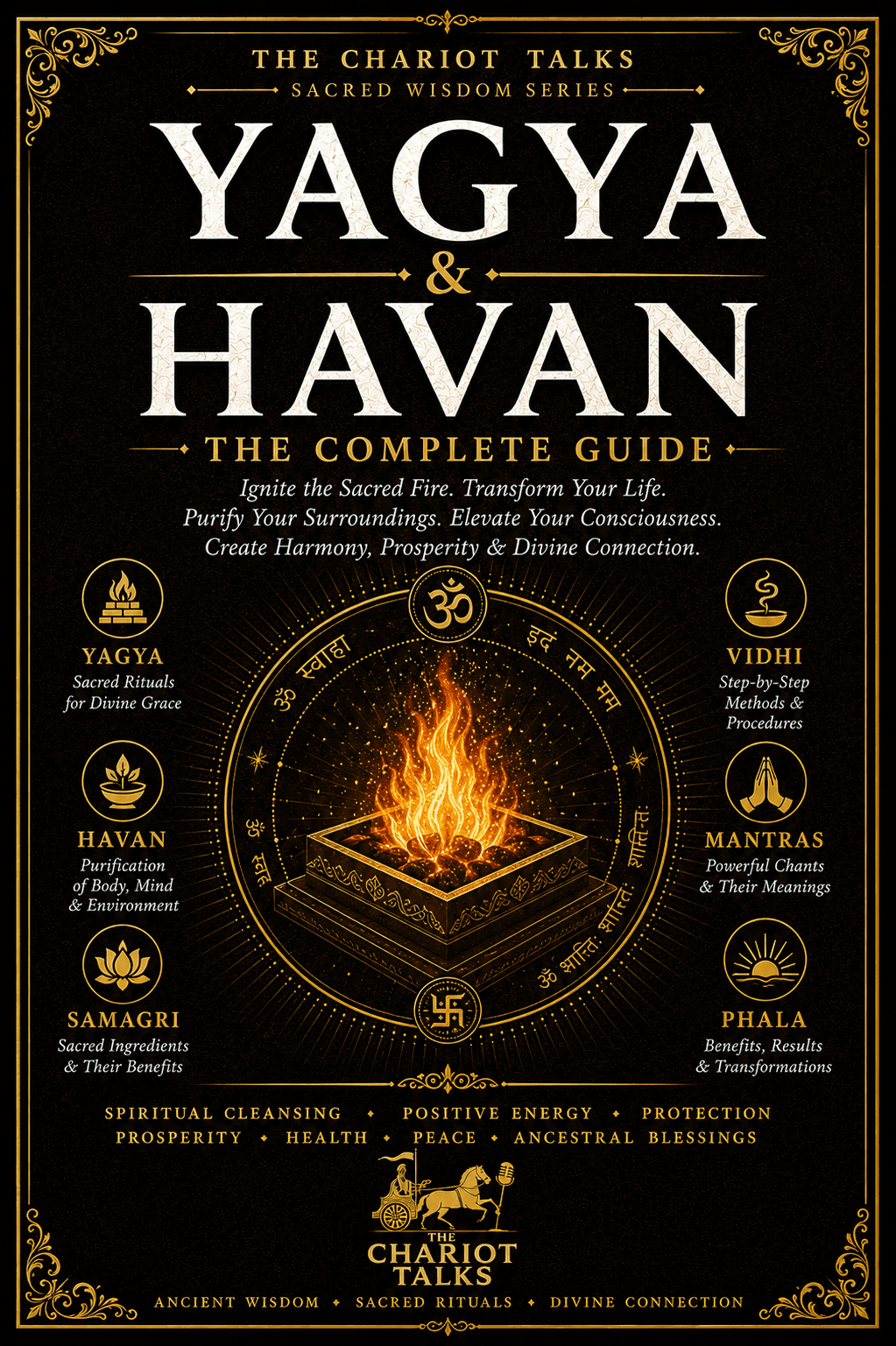
To perform havan with full confidence — the correct setup, the meaning of each samagri, the mantras and ahutis for different intentions, and specific yagyas for purification, prosperity, and healing — see the Yagya & Havan Course.
Frequently Asked Questions
Can I perform Havan at home by myself?
Yes. Havan is the household form of Yagya and can be performed at home with a fire-safe havan kunda, ghee, samagri, and a chosen mantra. Begin with a sankalpa (intention) and invoke Ganesha, then offer ahutis at each "Svaha". A structured guide helps you get the vidhi and mantras right.
What does "Svaha" mean in a Havan?
"Svaha" is chanted at the moment of offering into the fire. It roughly means "well said" or "so be it", and signals that the oblation of ghee and samagri is being given to Agni, the sacred fire, to carry to the deities.
What are the benefits of doing Havan?
Havan is traditionally believed to purify the surrounding environment, calm and focus the mind through mantra, and invoke blessings for health, prosperity, and the specific intention set at the start. It is commonly performed for housewarmings, festivals, and new beginnings.